
Roofing Cost in Arizona: 2026 Complete Guide
- A full roof replacement in the Phoenix area typically runs $8,500 to $24,000 based on industry cost guides, with material choice driving most of the range.
- Architectural shingle is the lowest-cost option installed; concrete tile, clay tile, and metal sit 30 to 60 percent higher or more.
- Hidden deck damage found during tear-off is the most common reason a final bill exceeds the original estimate.
- Get at least three written estimates with matching scope and verify every contractor's license with the Arizona Registrar of Contractors.
Replacing a roof in Arizona is one of the biggest checks a homeowner writes, and the quotes can swing by ten thousand dollars or more for what looks like the same job. This guide breaks down what a new roof actually costs across the Valley in 2026, what drives the number up or down, and how to tell a fair written estimate from a padded one.
The Short Answer: What a Roof Costs in Arizona
For a typical single-family home in the Phoenix metro area, a full roof replacement generally falls between $8,500 and $24,000, according to industry cost guides that track contractor pricing nationally. Most homeowners land somewhere in the middle of that range. Asphalt shingle roofs sit at the lower end, while concrete tile, clay tile, and metal systems push toward the top.
Those figures are industry estimates compiled from national cost databases, not quotes from any specific contractor. Your actual price depends on your roof's size, pitch, material, how many layers need tearing off, and what the crew finds underneath. Two homes on the same street can get quotes thousands apart if one has a simple gable roof and the other has hips, valleys, skylights, and two layers of old shingles.
Nationally, homeowner cost trackers put the average roof replacement somewhere around $9,500 to $12,000 for an asphalt shingle roof on a mid-size home (HomeAdvisor, 2024). Arizona runs a bit higher than the national average for a simple reason: tile is the dominant roofing material here, and tile costs more than shingle in both material and labor. If your home has a tile roof, which most Valley homes built after the 1980s do, expect your quotes to start higher than what friends in other states paid.
What Actually Drives the Price
Material choice matters more than anything else. On a per-square-foot basis installed, widely published contractor pricing puts architectural asphalt shingle at roughly $4.50 to $7.50, concrete tile at $6.00 to $10.00, clay tile at $8.00 to $14.00, standing-seam metal at $7.00 to $13.00, and spray polyurethane foam (for flat or low-slope sections) at $4.00 to $7.00. On a 2,000-square-foot roof, the gap between the cheapest and priciest option can exceed $15,000. Everything below is measured against that spread.
Roof size is measured in squares, not square feet of living space. Roofers price by the "square," which is 100 square feet of roof surface. A 2,000-square-foot home often has 22 to 30 squares of roofing once you account for pitch, overhangs, and garage. Steeper roofs have more surface area than shallow ones covering the same footprint, and every additional square adds material and labor.
Pitch and complexity add labor fast. A walkable 4/12 pitch is quick to work on. A steep 8/12 or 10/12 pitch slows the crew, requires more safety equipment, and wastes more material on cuts. Multiple rooflines, dormers, valleys, skylights, and chimneys each add flashing work, and flashing is skilled labor. A complex roof can cost 20 to 40 percent more than a simple one of the same square footage.
Ventilation upgrades are cheap insurance. Arizona attics can exceed 150°F in summer, and that trapped heat bakes shingles from below while driving up cooling bills. Ridge vents, powered attic fans, or additional soffit vents often add only a few hundred dollars during a replacement, when the crew is already there. Ask each bidder what ventilation your attic currently has and what they recommend; it is one of the few upgrades that pays back in both roof life and energy costs.
Tear-off layers multiply disposal and labor. Arizona building code generally allows no more than two roofing layers, and most replacements strip down to the deck. Each layer removed adds labor hours and dump fees. If your home still has its original layer plus one overlay, expect the tear-off line item to be noticeably higher than a single-layer job.
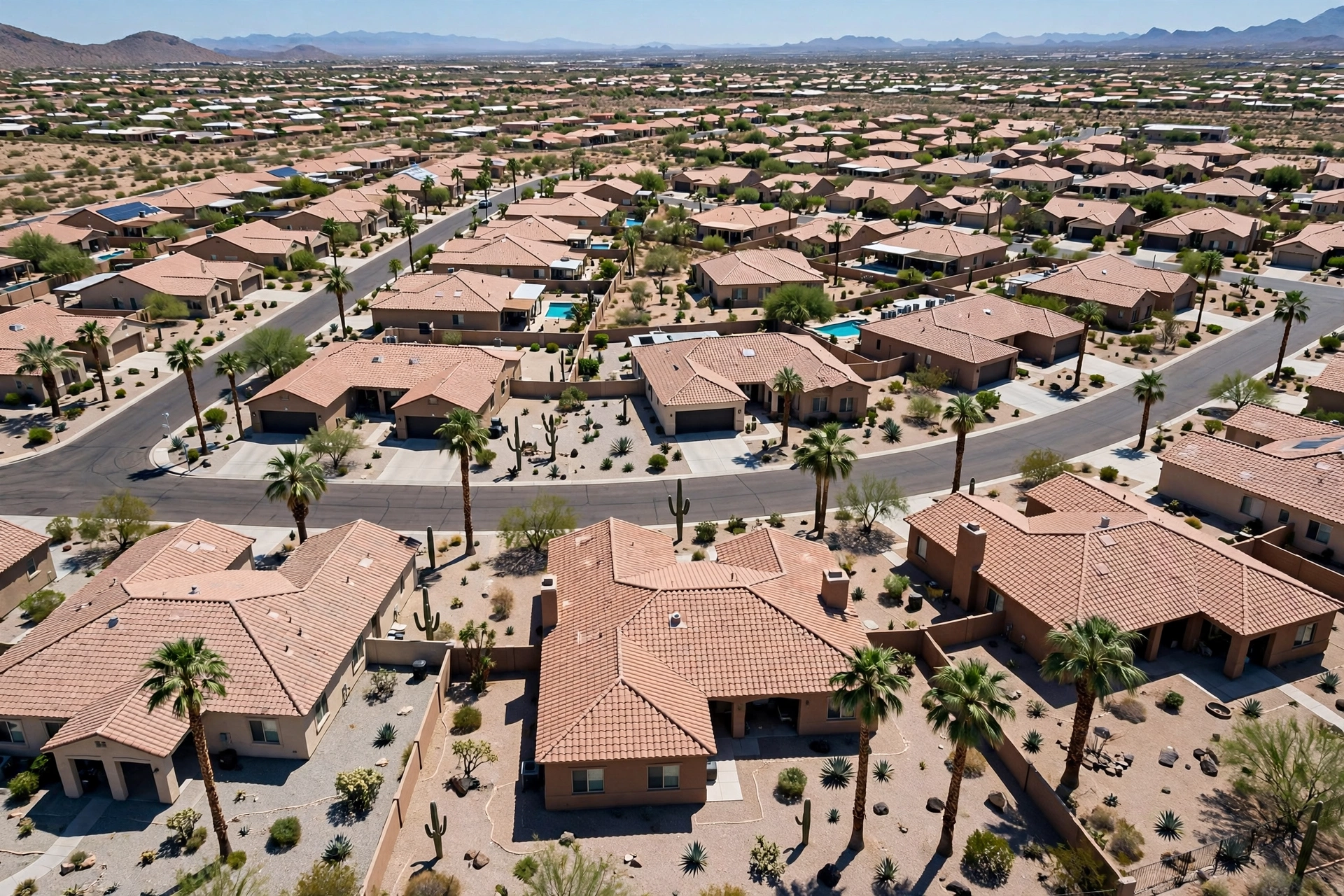
Roof Replacement Cost by Material in Arizona
The table below summarizes typical installed price ranges per square foot from industry cost guides. Treat these as planning numbers for comparing materials, not as bids. Labor rates in the Phoenix metro area, material shortages, and your roof's complexity will move your quotes around within or beyond these bands.
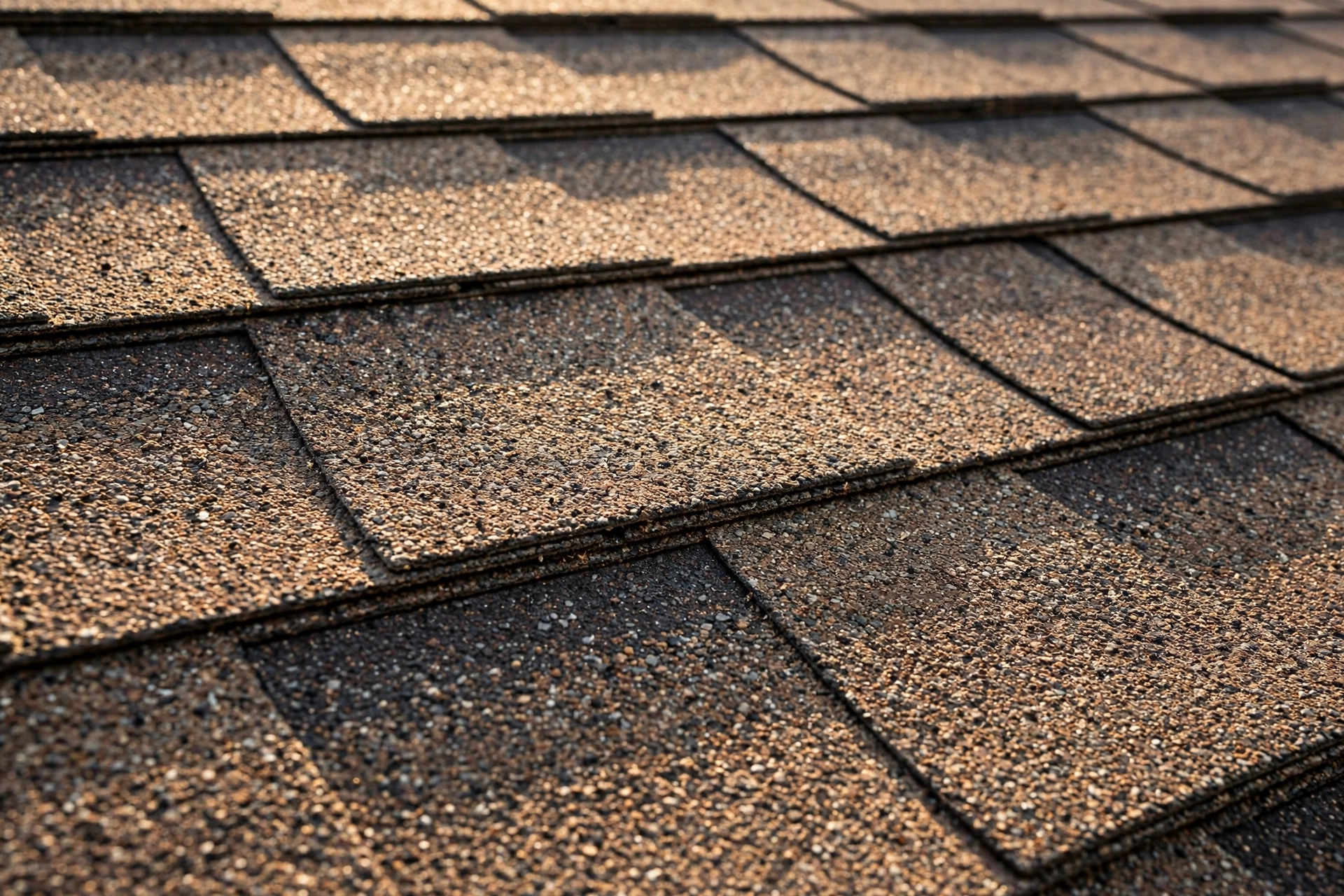
Architectural asphalt shingle: $4.50 to $7.50 per square foot installed. The budget-friendly default. A 25 to 30 year rated shingle in Arizona realistically lasts 18 to 25 years because of UV exposure. Best value if you plan to sell within a decade or need the lowest upfront cost.
Concrete tile: $6.00 to $10.00 per square foot installed. The Valley standard. Tiles themselves can last 40 to 50 years, but the underlayment beneath them is the real clock: in Arizona heat, underlayment often needs replacement at 20 to 30 years even when the tiles look fine. Many "tile roof replacements" are actually tile lift-and-relay jobs with new underlayment, which costs less than all-new tile.
Clay tile: $8.00 to $14.00 per square foot installed. Premium look, premium price, and heavier, so the structure must be rated for the load. Common on higher-end Scottsdale and Paradise Valley homes.
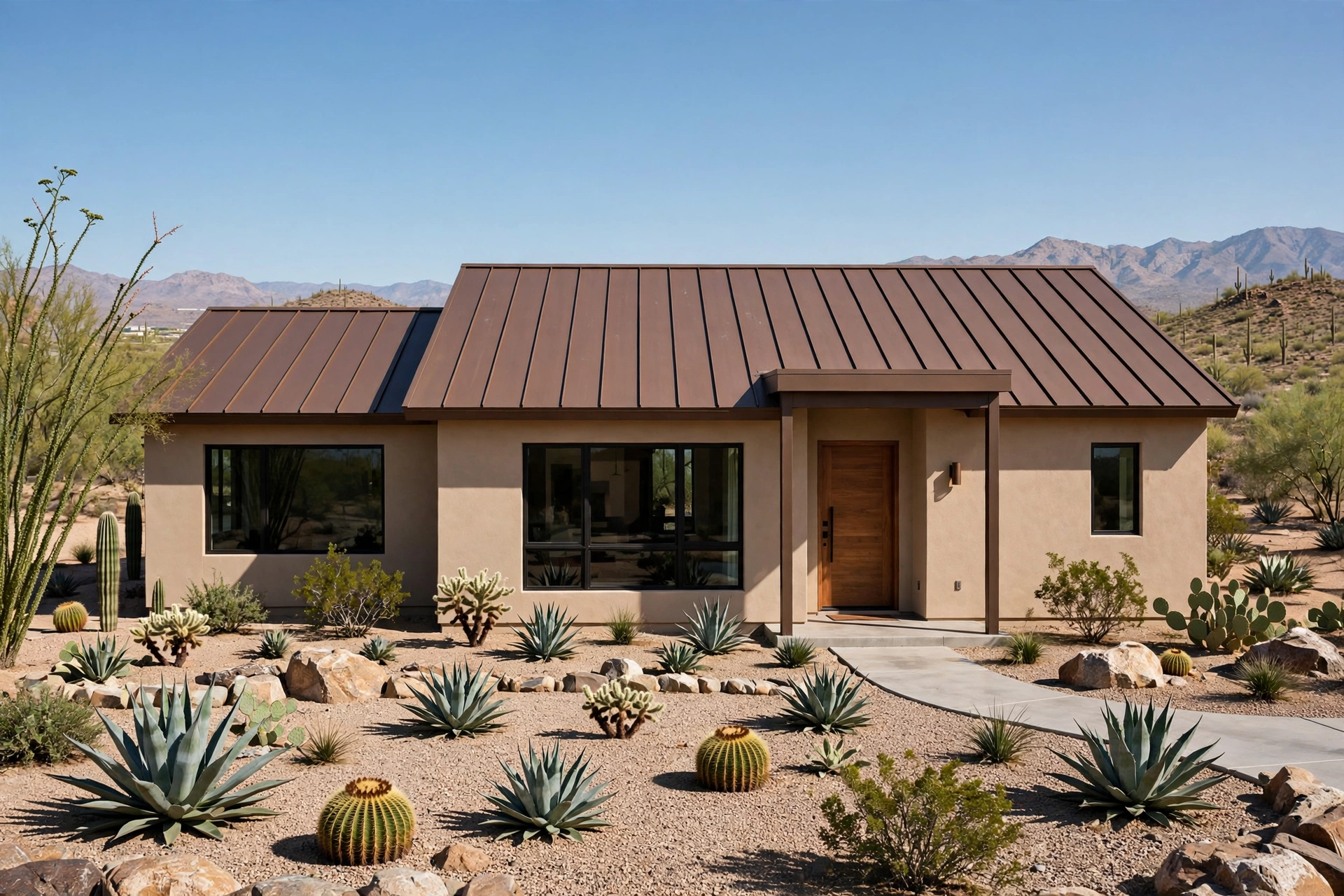
Standing-seam metal: $7.00 to $13.00 per square foot installed. Excellent heat reflectivity and 40 to 60 year lifespans, but the upfront cost and the smaller pool of qualified installers keep it a niche choice in the Valley.
Spray foam (flat/low-slope): $4.00 to $7.00 per square foot installed. Common on older Phoenix ranch homes and additions. Needs recoating roughly every 10 to 15 years, which is a maintenance cost buyers often overlook.
Real talk: if a quote comes in dramatically below every other bid, the contractor is usually cutting something you cannot see from the ground: thinner underlayment, skipped ice-and-water shield in valleys, reused flashing, or no permit. The cheapest roof is rarely the cheapest over 20 years.
Phoenix-Area Factors That Move Your Quote
Heat shortens shingle life, and estimators know it. Phoenix regularly sees more than 100 days above 100°F each year (National Weather Service, n.d.), and sustained UV cooks asphalt shingles faster than the manufacturer ratings printed for milder climates assume. Honest local estimators will tell you to expect the lower end of a shingle's rated lifespan here. That is not upselling; it is climatology.
Tile underlayment replacement is the Valley's signature job. If you own a tile roof that is 20 to 30 years old, you may not need new tiles at all. The standard service is a lift and relay: tiles are removed and stacked, old underlayment is torn off, new high-temperature underlayment goes down, and the original tiles are reinstalled with broken ones replaced. This typically costs substantially less than a full tile replacement, so ask every bidder whether your tiles are candidates for relay before accepting a full-replacement quote.
Monsoon season affects scheduling and pricing. From mid-June through September, afternoon microbursts can peel back shingles and expose underlayment in minutes. Roofers book out during storm season, and emergency tarping or repair work commands premium pricing. If your replacement is elective, the mild months from October through April usually mean faster scheduling and calmer crews.
HOA rules can dictate material and color. Many Valley HOAs restrict roofing to tile or specific color palettes. Check your CC&Rs before falling in love with a metal roof quote; an HOA rejection after you have signed a contract is an expensive lesson.
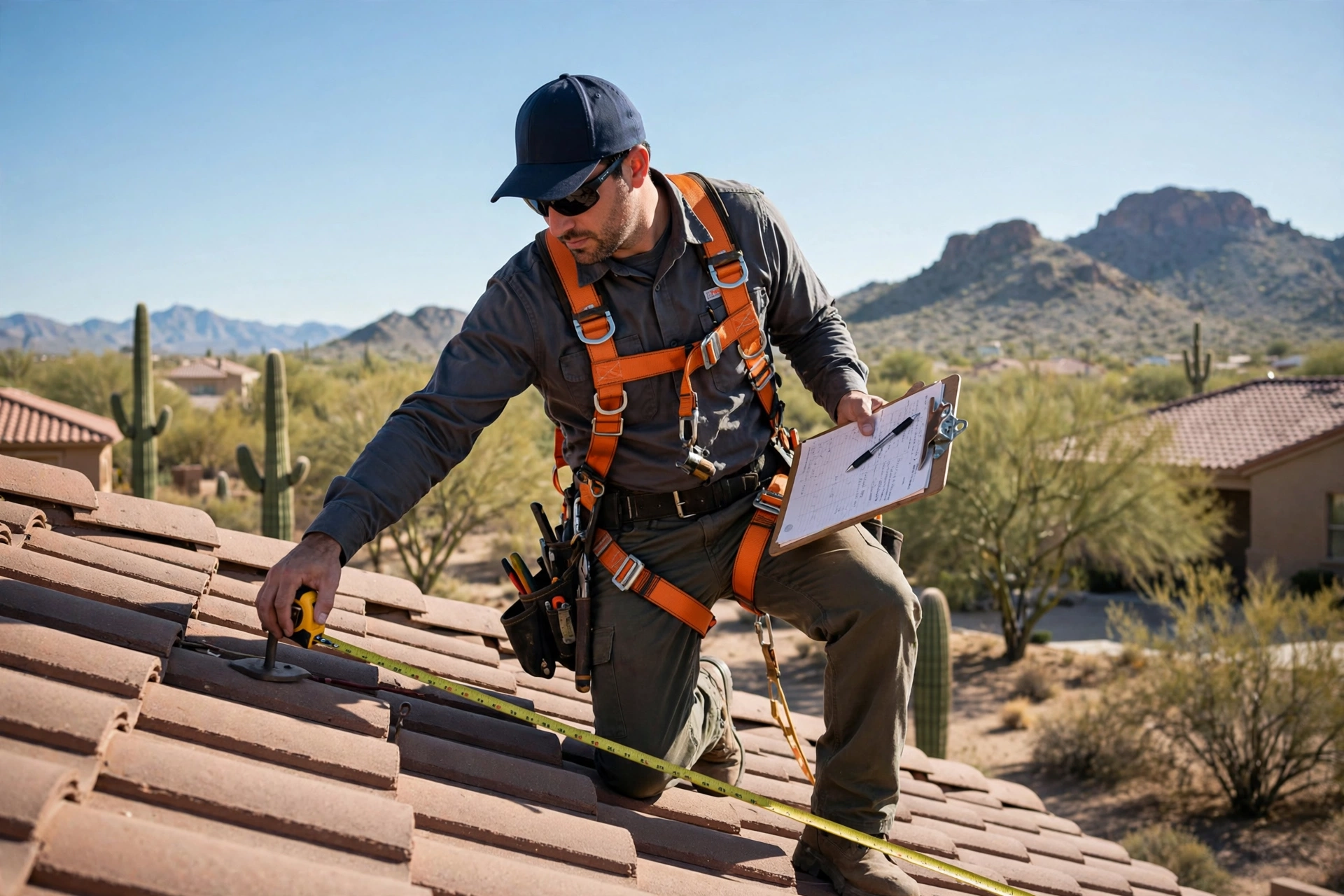
The Hidden Costs Nobody Puts in the Headline Price
Decking repair is the most common surprise. Once the old roofing comes off, the crew can finally see the wood deck. In Arizona, long-term slow leaks around flashing often rot sections of decking that looked fine from outside. Most contracts include a per-sheet price for deck replacement (industry guides cite roughly $50 to $100 per 4x8 sheet installed, plus labor). Ask for that unit price in writing before work starts so a few bad sheets do not become a mid-job negotiation.
Permits and inspections add a few hundred dollars. Phoenix, Mesa, Chandler, Scottsdale, and the other Valley cities each require roofing permits, typically a few hundred dollars depending on valuation. A legitimate contractor pulls the permit in their name. If a bidder suggests skipping the permit to save money, that is a red flag, not a discount.
Disposal fees are real. Tearing off 25 squares of tile or shingle generates literal tons of debris. Dumpster rental and landfill fees run several hundred dollars and should appear as a line item, not vanish into vague "labor" math.
Upgraded underlayment is worth pricing. Standard 30-pound felt is the code minimum, but synthetic and high-temperature underlayments last significantly longer in desert heat. The upgrade usually adds a few hundred dollars to the total and is one of the highest-value line items you can approve.
Repair vs. Replace: The Math That Matters
A full replacement is not always the right call. As a rough industry rule of thumb, if a repair costs more than about 25 to 30 percent of a replacement and your roof is past roughly 75 percent of its expected life, replacement usually wins on total cost of ownership. Patching a 24-year-old shingle roof for $3,500 when a replacement is $11,000 often just buys two more years of anxiety.
On the other hand, a tile roof at year 18 with sound tiles and one leaking valley is a repair candidate, not a replacement. Valley flashing and underlayment spot repairs are routine work. The key question to ask any estimator: "What is the remaining useful life of the system I already have?" If the honest answer is under five years, stop repairing and start comparing replacement bids.
Real talk: be wary of any contractor who diagnoses a full replacement from the driveway without going up on the roof or into the attic. A real assessment requires eyes on the deck, the attic underside, and the flashing details. The ladder is non-negotiable.
How to Read a Roofing Estimate Like an Estimator
A proper written estimate breaks the job into line items: tear-off, disposal, decking (with a per-sheet replacement price), underlayment type and brand, primary material brand and line, flashing replacement, ventilation work, permit fees, and warranty terms. If you receive a single number on a business card, you do not have an estimate; you have a guess.
Compare material brands and lines, not just totals. "Architectural shingle" spans products with very different wind ratings and warranties. Ask each bidder for the specific manufacturer and product line in writing, then compare equivalent tiers. A bid that is $2,000 cheaper because it specs a builder-grade shingle against a premium one is not actually cheaper.
Warranties come in two parts: the manufacturer warranty on materials and the contractor's workmanship warranty on installation. Manufacturer warranties of 25 to 50 years are common, but read the fine print about prorating and transferability. Workmanship warranties in the Valley commonly run 5 to 10 years. Get both in writing, and confirm who you call if a leak appears in year three.
Insurance, Financing, and Timing
Insurance covers sudden damage, not age. If a monsoon microburst rips off shingles, your homeowner's policy may cover the repair minus your deductible. If your 26-year-old roof simply wore out, that is maintenance, and insurers will not pay for it. Document storm damage promptly with dated photos, and understand your deductible before filing; a $1,500 repair against a $2,500 deductible is not a claim.
Financing is common and worth comparing. Many roofing contractors offer financing through third-party lenders, and home equity options often carry lower rates. Compare the total cost of the loan, not just the monthly payment. A 12-year note at a high rate can add thousands to a roof that a shorter term would not. Ask whether the quoted price changes if you pay cash; some contractors build financing fees into every quote, and a cash price can be meaningfully lower.
Timing your project saves real money. Emergency work after a storm costs more than scheduled work in the mild season, for the same reason an emergency plumber costs more than a scheduled one. If your roof is aging but not leaking, getting quotes in fall or winter and scheduling at your convenience beats negotiating from under a blue tarp in August.
Getting Quotes You Can Actually Compare
Get at least three written estimates from licensed contractors, and make sure each one specs the same scope: same material tier, same underlayment, same flashing approach, same warranty terms. Apples-to-apples is the only comparison that means anything.
Verify licensing through the Arizona Registrar of Contractors before anyone climbs your ladder. Arizona requires roofing contractors to hold a license, and the Registrar's website lets you check status and complaint history for free (Arizona Registrar of Contractors, n.d.). Unlicensed work voids manufacturer warranties and leaves you with no recourse through the Registrar's recovery fund if the job goes wrong.
Finally, never pay the full amount upfront. A deposit of 10 to 30 percent with the balance due on completion and final inspection is standard industry practice. Anyone demanding full payment before materials arrive is telling you everything about how the rest of the job will go. And once the job is done, keep your contract, warranty documents, and permit records in one folder; you will need them when you sell the home, and buyers notice a documented roof.
Overlay vs. Tear-Off: When a Second Layer Makes Sense
An overlay, installing new shingles directly over the old ones, costs less because it skips tear-off labor and disposal. In limited cases it is legitimate: a single existing layer, a sound deck, and local code approval. But overlays hide deck problems, add weight, and typically void enhanced manufacturer warranties. In Arizona's heat, trapping an extra layer also holds more warmth against the deck.
Most reputable Valley contractors recommend tear-off for replacements, and for good reason. The tear-off is the only time anyone sees your decking in decades. Saving a thousand dollars to skip the one inspection that matters most is false economy. If a bidder pushes an overlay hard without discussing deck condition, ask why, and get the reasoning in writing.
Red Flags in Roofing Sales Pitches
Storm-chasing sales tactics follow every major monsoon. Be cautious of anyone who knocks uninvited the day after a storm, claims your roof has hail damage visible only to them, or pressures you to sign before an adjuster visits. Legitimate local contractors do not need to manufacture urgency; their schedules speak for themselves.
Other warning signs: demanding cash or full payment upfront, offering to "cover your deductible" (which is insurance fraud in most cases), refusing to provide a license number, or quoting a price that expires today. A real estimate is good for at least 30 days because material prices do not swing overnight.
One more: the "we were just doing your neighbor's roof" line. Sometimes it is true. Often it is a script. Either way, evaluate the bid on its line items and the contractor's license record, not on the story that came with it.
Frequently Asked Questions
How much does it cost to replace a roof in Arizona in 2026?
Industry cost guides put a typical Phoenix-area roof replacement between $8,500 and $24,000 depending on material and roof complexity. Asphalt shingle sits at the lower end and tile or metal at the higher end. These are planning estimates; only a written quote based on an on-roof inspection reflects your home.
Is it cheaper to repair a tile roof or replace it?
Repair is usually cheaper when the tiles are sound and the problem is isolated, such as a leaking valley or a few slipped tiles. If the underlayment is failing across large areas on a 20-plus-year-old tile roof, a lift and relay with new underlayment is often the best value, costing less than all-new tile.
How long does a roof last in Arizona heat?
Asphalt shingles typically last 18 to 25 years here despite 25 to 30 year manufacturer ratings, because of UV exposure. Concrete tile can last 40 to 50 years, but the underlayment beneath usually needs replacement at 20 to 30 years. Metal roofs commonly last 40 to 60 years.
Does homeowners insurance pay for a new roof in Arizona?
Insurance generally covers sudden, accidental damage such as monsoon wind damage, minus your deductible. It does not cover wear and tear or age-related failure. Document storm damage with dated photos and review your deductible before filing a claim.
Should I get multiple quotes for a roof replacement?
Yes. Get at least three written estimates specifying the same material tier, underlayment, flashing scope, and warranty terms, and verify each contractor's license with the Arizona Registrar of Contractors. Comparable scope is what makes quotes comparable.
What is the cheapest roofing material for an Arizona home?
Architectural asphalt shingle has the lowest installed cost, roughly $4.50 to $7.50 per square foot according to industry guides. It also has the shortest lifespan in desert heat, so compare total cost over the years you plan to own the home, not just the installation price.
References
Arizona Registrar of Contractors. (n.d.). Search for a licensed contractor. https://roc.az.gov/
HomeAdvisor. (2024). How much does roof replacement cost? https://www.homeadvisor.com/cost/roofing/install-a-roof/
National Weather Service. (n.d.). Phoenix climate normals and records. https://www.weather.gov/psr/
Tile Roofing Industry Alliance. (n.d.). Concrete and clay tile roofing. https://tileroofing.org/
U.S. Department of Energy. (n.d.). Cool roofs. https://www.energy.gov/energysaver/cool-roofs
Material Lifespan in Arizona's Climate
Arizona's UV exposure and heat cycling shorten material lifespan compared to milder climates, which matters when weighing upfront cost against how many years you're actually buying:
- Asphalt shingle: 12 to 20 years standard, up to 25 years for architectural shingle with reflective granules
- Concrete or clay tile: 50 to 75 years for the tile itself, though underlayment beneath it typically needs attention around 15 to 20 years
- Metal roofing: 40 to 60 years, with the added benefit of reducing cooling costs by roughly 10 to 25 percent thanks to heat reflectivity
- Spray foam: requires recoating every 10 to 15 years to maintain its waterproofing
That lifespan gap is part of why tile costs more upfront but remains the standard choice across so many Valley neighborhoods; the cost per year of service often evens out or favors tile over a shingle roof's shorter lifespan.
Regional Cost Differences Across the Valley
Pricing isn't perfectly uniform across Phoenix, Mesa, Chandler, Gilbert, Tempe, Scottsdale, Glendale, and Peoria, even for comparable homes. Scottsdale and parts of North Phoenix tend to see higher average project costs, driven less by labor rates and more by home size, architectural complexity, and a higher concentration of premium materials like cedar shake or larger tile roofs with multiple rooflines. Newer subdivisions in Buckeye, Goodyear, and Queen Creek often see more standardized shingle construction, which tends to bring per-project costs down simply because the roofs themselves are less architecturally complex.
Permit fees also vary by municipality, generally in the $157 to $200 range, and your contractor should handle that process as part of the project rather than leaving it to you to navigate separately.
Financing and Payment Timing
Given how wide the cost range runs, financing comes up often, particularly for tile or metal replacements at the higher end of the spectrum. Many roofing companies can point homeowners toward financing options during the estimate process, and it's a reasonable question to ask directly if the upfront number is a concern. What matters most is that any financing conversation happens alongside, not instead of, a proper written estimate based on an actual inspection of your roof.
Payment structure is worth clarifying upfront too. Reputable contractors typically don't require full payment before work begins, and a payment schedule tied to project milestones (start of work, completion, final inspection) is a normal, protective structure worth expecting.
The Real Cost of Delaying a Needed Replacement
It's worth being honest about the other side of this cost conversation: waiting on a roof that genuinely needs replacement often costs more in the long run, not less. A roof with failing underlayment that isn't addressed can lead to deck damage, which then becomes part of the replacement cost once it's finally done. Interior water damage from a leak that develops while a homeowner is putting off a decision adds drywall, insulation, and sometimes flooring repair on top of the roof cost itself.
This isn't a pressure tactic, it's simply the honest math. A roof that's been given an accurate diagnosis and is genuinely at the point of needing replacement tends to cost less the sooner that replacement happens, purely because delay compounds the damage a failing roof can cause to the structure underneath it.
How Roof Size Actually Translates to Square Footage Pricing
Homeowners are sometimes surprised that "roof square footage" isn't the same as their home's living space square footage. Roof area accounts for pitch, overhangs, and any complexity in the roofline, meaning a 2,000 square foot home can easily have a roof surface closer to 2,400 or 2,600 square feet once pitch is factored in. This is part of why an accurate quote requires actual roof measurement, not just a home's listed square footage from a real estate listing.
Every number above is a range, not a quote. The only way to know the true cost to replace a roof at your specific address is a physical inspection that checks deck condition, current material state, and roof complexity. We provide free roof inspections across Phoenix, Mesa, Chandler, Gilbert, Tempe, Scottsdale, Glendale, and Peoria, and every estimate that follows is written, not a verbal number pulled from a description over the phone.
If you're trying to decide between a full replacement and a targeted repair, that decision usually comes down to deck condition and how many prior repairs the roof has already had, both of which we can show you with photos during inspection.
What's Included in a Written Estimate (and What Sometimes Isn't)
Not every quote covers the same scope of work, which is part of why two estimates for the same roof can differ by more than material or labor rates alone would explain. A thorough estimate should specify tear-off and disposal of the old roofing material, decking inspection and repair or replacement of any rotted or damaged sheathing found underneath, new underlayment, the roofing material itself, flashing around penetrations and edges, and cleanup. Some lower quotes leave out decking repair as a line item entirely, planning to charge for it separately if it comes up, which can turn an attractively low number into a higher final bill once work is underway. We write decking repair into our estimates as a contingency line with a per-sheet rate specified up front, so if the crew does find rotted decking once the old roofing is off, the homeowner already knows what that will cost rather than getting a surprise change order mid-project.
How Permit and Inspection Requirements Affect Cost and Timeline
Most roof replacements in the Phoenix metro area require a permit from the local municipality, and that permit typically comes with at least one inspection before the project is considered complete. The permit fee itself is a modest part of the overall cost, but the process affects timeline more than budget, since scheduling that inspection and waiting for it to pass adds days to a project that would otherwise wrap up faster. A contractor who pulls permits properly and builds inspection scheduling into the project timeline from the start is doing it the right way, even though it can mean a slightly longer calendar time than a contractor cutting that step, which is itself a red flag worth asking about directly when comparing quotes.
Frequently Asked Questions
Is $30,000 too much for a roof replacement?
It depends entirely on size, material, and structural condition. A larger tile re-roof with deck repair can reasonably reach that figure, while a smaller shingle replacement should generally cost less. Get a written estimate specific to your home rather than comparing to a number you saw elsewhere.
Does roof cost vary by city within the Valley?
Yes, somewhat. Permit fees differ by municipality (typically $157 to $200), and cities with a higher concentration of larger or more architecturally complex homes, like Scottsdale, tend to see higher average project costs than more standardized subdivisions.
Is it cheaper to repair than replace?
Almost always, if the damage is contained. A repair only becomes false economy when a roof has had multiple repairs already or the deck itself has failed, at which point a replacement often costs less over time than repeated patching.
What time of year is cheapest for roof replacement in Arizona?
Fall and winter (October through February) tend to have more contractor availability than the pre-monsoon rush in spring, though pricing itself doesn't swing dramatically by season here the way it might in colder climates.
How does labor cost factor into the total?
Labor typically accounts for roughly half to sixty percent of a total roofing project cost in the Phoenix area, meaning material choice alone doesn't tell the whole story. A more complex roofline with multiple valleys and penetrations takes longer to install correctly regardless of material.
Do older homes cost more to reroof than newer construction?
Often yes, mainly because older homes are more likely to have deck damage discovered during tear-off, and older framing sometimes takes extra time to work around correctly.
Is roof square footage the same as my home's living space square footage?
No. Roof area accounts for pitch, overhangs, and roofline complexity, so a 2,000 square foot home can easily have a roof surface closer to 2,400 to 2,600 square feet once pitch is factored in.
Get a Real Number for Your Roof
No generic price ranges, no phone-quote guessing. A written cost to replace a roof based on your actual home.
[Call Now]
Free written estimates · Licensed & insured Valley roofers
Roof Questions? One Call.
Free inspection, honest answer, no pressure either way.
Call 1-(844) 640-5335